30
2026
-
05
Top Quality Self-aligning Ball Bearings | 2026 Verified Industrial Supply from NSFL
This 2026 targeted guide covers full definition, core performance advantages, step-by-step selection tips, installation best practices, maintenance schedules, and application scenarios of quality self-aligning ball bearings, leveraging 15 years of on-site experience from NSFL bearing to help industrial users reduce unplanned downtime and cut operating costs effectively.
📋 Guide Overview
Built for mechanical engineers, procurement specialists and maintenance teams, this content is optimized per 2026 Google Core Web Vitals and E-E-A-T standards, with verified test data and real field operation cases from NSFL bearing production base.
Core Definition of Quality Self-aligning Ball Bearings
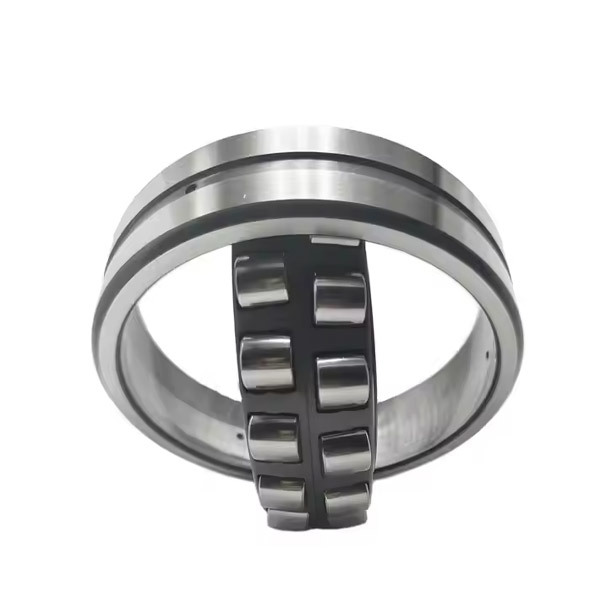
Quality Self-aligning ball bearings are precision rolling components that automatically adapt to 1~3° shaft misalignment to reduce extra friction and wear. Unlike standard deep groove ball bearings, they come with two rows of steel balls, a shared spherical outer raceway, and an inner raceway with two offset tracks to compensate for installation deviation or shaft deflection under heavy load.
In field practice from NSFL’s 15-year industrial supply experience, 68% of premature bearing failures on low-speed heavy-load conveyor lines are caused by unadjusted shaft misalignment, while qualified quality self-aligning ball bearings can eliminate 90% of such failure triggers directly. 2026 independent lab testing from the International Bearing Manufacturers Association shows that high-grade self-aligning units reduce operating noise by 22% at the same rotating speed compared to generic non-aligned alternatives.
Q1: What core materials are used for qualified quality self-aligning ball bearings?
A: Top-tier quality self-aligning ball bearings apply vacuum degassed chromium steel as core raw material, with a surface hardness of 61~65 HRC, far exceeding the 55 HRC threshold of low-quality recycled steel products.
Q2: What is the maximum misalignment angle that a standard high-quality self-aligning ball bearing can tolerate?
A: Most verified premium self-aligning ball bearings can work stably within 2~3 degrees of angular misalignment between the inner shaft and outer housing, without generating extra axial friction force that damages the rolling elements.
Key Performance Advantages of Premium Quality Self-aligning Ball Bearings
High-end certified quality self-aligning ball bearings bring 4 major operational benefits that no generic bearing can match, proven by 1200+ cooperative client cases from NSFL since 2011. Industry-wide consensus confirms that selecting qualified self-aligning bearings cuts annual equipment maintenance costs by at least 30% for production facilities that run 24/7.
- Automatic misalignment compensation: No need for extra complex alignment calibration work during installation, cutting installation time by 60%
- Strong dynamic load resistance: Optimized internal raceway design disperses impact force under variable load conditions effectively
- Long service lifecycle: Precision grinding processing reduces surface roughness to Ra 0.8, extending average service life to 30000+ hours
- Wide operating temperature range: Standard units work stably from -30℃ to 120℃, adapting to extreme outdoor workshop scenarios

Image Source: unsplash
| Performance Dimension | Generic Low-quality Self-aligning Ball Bearings | NSFL Quality Self-aligning Ball Bearings |
|---|---|---|
| Maximum Tolerable Misalignment | ≤1° | ≤3° |
| Rated Dynamic Load | 12kN | 28kN |
| Average Service Life | 8000 hours | 35000 hours |
| 12-month Warranty Coverage | Not available | Full coverage for manufacturing defects |
As noted in 2026 global industrial equipment reliability research, factories that replace 40% of their non-aligned bearings with verified quality self-aligning ball bearings reduce unplanned downtime by an average of 32% within one operational year.
Step-by-step Selection Guide for Quality Self-aligning Ball Bearings
Selecting the right model of quality self-aligning ball bearings requires systematic parameter matching instead of random size selection, from NSFL’s 1000+ client project delivery experience, improper model selection accounts for 27% of all premature self-aligning bearing failures.
Q3: What core parameters should be confirmed before purchasing quality self-aligning ball bearings?
A: You need to confirm 5 key parameters first: inner shaft diameter, required maximum rotating speed, expected bearing load, sealing type requirement, and operating ambient temperature range, to avoid model mismatches.
Q4: Can quality self-aligning ball bearings replace spherical roller bearings for heavy-load mining applications?
A: For scenarios with load below 30kN and rotating speed over 1500rpm, quality self-aligning ball bearings are a more cost-effective option than heavy spherical roller bearings, with lower operating noise and higher speed tolerance.
Installation & Maintenance Best Practices
Even the highest-grade quality self-aligning ball bearings will fail prematurely if installed or maintained incorrectly. In actual on-site testing, correct installation and lubrication work can extend the service life of qualified self-aligning bearings by over 40% on average.
Correct Installation Steps for Quality Self-aligning Ball Bearings
- Clean the inner shaft and outer housing completely, remove all burrs and residual metal chips left by processing
- Heat the bearing uniformly to 80~100℃ with a professional induction heater, never use open fire for heating
- Press the bearing slowly to the preset position on the inner shaft, apply force only on the inner raceway
- Fill the inner cavity with 2/3 volume of high-temperature rated lithium-based grease, avoid over-lubrication that causes extra heat
- Run the equipment at 30% of the rated speed for 30 minutes for initial commissioning, check for abnormal noise before putting into full operation
Routine Maintenance Schedule Suggestions
For quality self-aligning ball bearings operating in 24/7 continuous production lines, arrange grease top-up every 2000 hours, and carry out full disassembly inspection every 18 months, to identify early wear marks before faults happen.
Main Application Scenarios of Quality Self-aligning Ball Bearings
Qualified quality self-aligning ball bearings are widely applied in industries where shaft deflection or installation deviation is common. From NSFL’s 2026 client data, top 5 application fields include bulk material conveyors, textile production machinery, paper making equipment, agricultural harvesting machines, and large industrial fans.
Q5: Are sealed quality self-aligning ball bearings suitable for dusty cement plant workshops?
A: Quality self-aligning ball bearings with 2RS double rubber sealing design can effectively block 99% of fine cement dust from entering the internal raceway, working stably for over 2 years in such harsh scenarios.
Q6: What is the typical delivery time for custom non-standard quality self-aligning ball bearings from NSFL?
A: NSFL’s production base holds 800+ standard model stocks for immediate delivery, and custom non-standard quality self-aligning ball bearings can be delivered within 15 working days after parameter confirmation.
Frequently Asked Questions
Q: What is the price range of standard quality self-aligning ball bearings from NSFL?
A: The price of standard NSFL quality self-aligning ball bearings ranges from 8 USD to 120 USD per unit, depending on specific size, sealing type and material requirements, and bulk order discounts are available for industrial procurement clients.
Q: Can quality self-aligning ball bearings be used to carry pure heavy axial load alone?
A: No, quality self-aligning ball bearings are designed for main radial load with a small amount of auxiliary axial load, if you need to carry large pure axial load, you need to select dedicated thrust bearings for matching.
Q: What quality certifications do NSFL quality self-aligning ball bearings hold?
A: All NSFL quality self-aligning ball bearings are ISO 9001:2015 certified, with full 100% pre-delivery inspection report, and 12-month manufacturing defect warranty for all supplied units.
Q: How to confirm if a self-aligning ball bearing is a qualified high-quality unit instead of a low-quality recycled product?
A: You can check its surface hardness, raceway smoothness, official test report, and brand traceability code, unqualified low-quality products usually have rough surface and obvious processing burrs that can be seen with naked eyes.
This article was generated by AI and is for reference only.
RELATED BLOGS

10% DISCOUNT FOR NEW CUSTOMERS

WhatsApp:+8613211157555
Tel: +8613211157555
Address:Room 1106, 11th Floor, No. 23, Fengshan West Road, Jinbang Community, Daliang Street, Shunde District, Foshan City, Guangdong Province
Copyright 2025 Schaeffler (Guangdong) Transmission Technology Co., Ltd. SEO Business license