21
2026
-
09
Understanding Angular Contact Ball Bearings: Key Insights for Industrial Applications
--- Angular contact ball bearings are a pivotal component in various industrial applications, particularly those that require high precision and load-carrying capabilities. Understanding their design, functionality, and advantages can greatly assist professionals in selecting the right bearing for their specific needs. ### Design and Functionality Angular contact ball bearings are designed to hand
Angular contact ball bearings are a pivotal component in various industrial applications, particularly those that require high precision and load-carrying capabilities. Understanding their design, functionality, and advantages can greatly assist professionals in selecting the right bearing for their specific needs.
### Design and Functionality
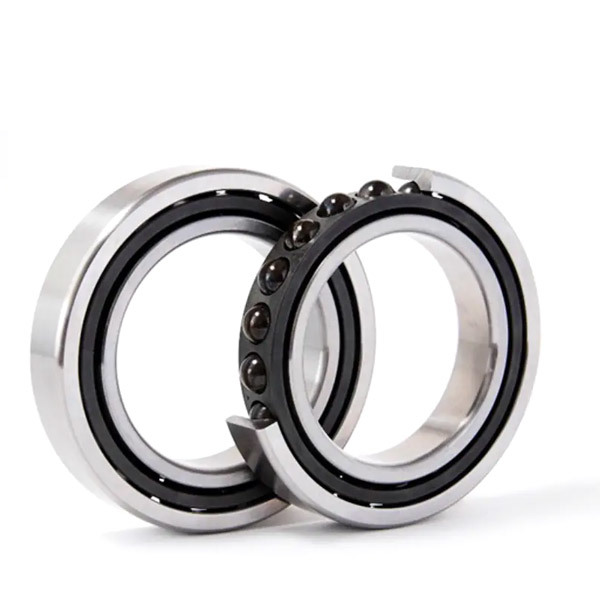
Angular contact ball bearings are designed to handle both radial and axial loads, making them ideal for applications where forces are applied in both directions. The unique design features a raceway that is angled relative to the axis of the bearing, allowing for increased contact angles when load is applied. This design enables the bearing to support higher axial loads compared to standard radial ball bearings. The contact angle, which can vary from 15° to 40°, also significantly affects the bearing's performance characteristics, including its stiffness and capacity.
### Advantages
One of the primary advantages of angular contact ball bearings is their ability to accommodate axial loads in one direction while still managing radial loads. This makes them particularly useful in applications such as machine tool spindles, automotive gearboxes, and turbine motors, where precise alignment and load distribution are critical. Furthermore, angular contact ball bearings exhibit lower friction and higher speed capabilities, which are essential for high-performance machinery.
Additionally, these bearings are available in various types, including single-row, double-row, and matched pairs. Single-row bearings are typically used in applications with limited space, while double-row configurations can handle larger loads and are suitable for more demanding environments. The ability to match pairs allows for customized configurations that optimize performance for specific applications.
### Applications
In industrial settings, angular contact ball bearings are utilized in a wide range of machinery and equipment. Their robust design and performance make them an excellent choice for CNC machines, printing presses, and robotics. For instance, in CNC machining, these bearings provide the precision necessary for accurate tooling and part fabrication. Similarly, in automotive applications, they are frequently found in transmissions and differentials, where they contribute to smooth operation and durability.
### Conclusion
Incorporating angular contact ball bearings into your machinery can significantly enhance performance and reliability. By understanding their unique design and the advantages they offer, industrial professionals can make informed decisions that lead to improved operational efficiency. As you consider the requirements of your specific applications, keep in mind the various configurations and load capacities available to ensure optimal performance. Whether used in high-speed applications or heavy-duty machinery, angular contact ball bearings are a vital component that can drive success in your industrial endeavors.

10% DISCOUNT FOR NEW CUSTOMERS

WhatsApp:+8613211157555
Tel: +8613211157555
Address:Room 1106, 11th Floor, No. 23, Fengshan West Road, Jinbang Community, Daliang Street, Shunde District, Foshan City, Guangdong Province
Copyright 2025 Schaeffler (Guangdong) Transmission Technology Co., Ltd. SEO Business license