11
2026
-
08
Tapered Roller Bearings vs. Other Bearing Types: A Comprehensive Guide to Understanding Their Advantages and Applications
Tapered Roller Bearings vs. Other Bearing Types: What You Need to Know Table of Contents 1. Introduction to Bearings 2. Understanding Bearings: The Basics 2.1 What Are Bearings? 2.2 The Importance of Bearings in Machinery 3. Types of Bearings: An Overview 3.1 Ball Bearings 3.2 Roller Bearings 3.3 Ta
Tapered Roller Bearings vs. Other Bearing Types: What You Need to Know
Table of Contents
- 1. Introduction to Bearings
- 2. Understanding Bearings: The Basics
- 3. Types of Bearings: An Overview
- 4. Advantages of Tapered Roller Bearings
- 5. Applications of Tapered Roller Bearings
- 6. Comparing Tapered Roller Bearings with Other Types
- 7. Choosing the Right Bearing for Your Application
- 8. Conclusion
- 9. Frequently Asked Questions (FAQs)
1. Introduction to Bearings
In the realm of industrial machinery and equipment, bearings play a crucial role in ensuring smooth operation and efficiency. Among the myriad types of bearings available, tapered roller bearings stand out for their unique design and functionality. This article seeks to delve into the features, advantages, and applications of tapered roller bearings, while also contrasting them with other popular bearing types.
2. Understanding Bearings: The Basics
2.1 What Are Bearings?
Bearings are mechanical components that facilitate smooth movement between two parts, typically a stationary and a rotating element. They reduce friction and wear, enabling efficient operation while supporting loads.
2.2 The Importance of Bearings in Machinery
In machinery, bearings are vital for performance and longevity. They support various loads, including radial and axial forces, and their selection directly impacts the efficiency and reliability of equipment.
3. Types of Bearings: An Overview
Bearings can be classified into several categories based on their design, load capacity, and application.
3.1 Ball Bearings
Ball bearings utilize spherical balls to maintain separation between the bearing races. They are versatile and can handle radial and axial loads, making them widely used in various applications, from electric motors to automotive engines.
3.2 Roller Bearings
Roller bearings use cylindrical rollers instead of balls, allowing them to carry heavier loads. They are suitable for applications where high radial loads are present.
3.3 Tapered Roller Bearings
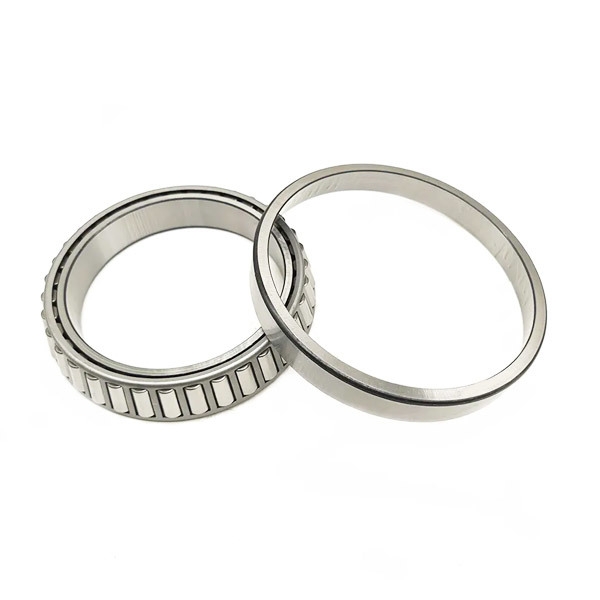
Tapered roller bearings have conical rollers and are designed to handle both radial and axial loads. Their unique shape allows them to efficiently distribute loads, making them ideal for high-stress applications in industries like automotive and manufacturing.
3.4 Spherical Bearings
Spherical bearings are designed to accommodate misalignment between components. They consist of an inner and outer ring with a spherical shape, allowing for rotational movement in multiple directions.
4. Advantages of Tapered Roller Bearings
Tapered roller bearings offer several advantages that make them a preferred choice in various industrial applications:
1. **Load Capacity**: Their design allows for substantial load-bearing capabilities, making them suitable for heavy machinery.
2. **Versatility**: They can accommodate both radial and axial loads, providing flexibility in design and application.
3. **Reduced Friction**: The tapered design minimizes friction, leading to enhanced efficiency and longevity.
4. **Alignment**: They can handle misalignment more effectively than some other bearing types, which is crucial for dynamic applications.
5. **Durability**: With proper lubrication and maintenance, tapered roller bearings can last significantly longer than other bearing types.
5. Applications of Tapered Roller Bearings
Tapered roller bearings are employed in various applications due to their robustness and reliability:
- **Automotive Industry**: Used in wheel hubs, transmissions, and differentials, taper roller bearings ensure smooth vehicle operation.
- **Heavy Machinery**: They are essential in construction and mining equipment, where they bear substantial loads.
- **Aerospace Applications**: Tapered roller bearings help maintain precision in aircraft components under varying loads.
- **Industrial Equipment**: From conveyor systems to pumps, these bearings are integral to the functionality of various machinery.
6. Comparing Tapered Roller Bearings with Other Types
Understanding the nuances between tapered roller bearings and other types can guide users in making the right selection.
6.1 Tapered vs. Ball Bearings
While ball bearings are versatile, they are often limited in load capacity compared to tapered roller bearings. Tapered roller bearings excel in applications requiring high load support.
6.2 Tapered vs. Roller Bearings
Although both tapered and cylindrical roller bearings can handle heavy loads, tapered roller bearings are better suited for applications with combined radial and axial loads due to their design.
6.3 Tapered vs. Spherical Bearings
Spherical bearings accommodate misalignment but may not offer the same load capacity and efficiency as tapered roller bearings, making the latter a better choice for high-load scenarios.
7. Choosing the Right Bearing for Your Application
Selecting the appropriate bearing type is crucial for optimal performance. Consider the following factors:
- **Load Requirements**: Determine the type and magnitude of loads the bearing will encounter.
- **Speed**: Some bearings perform better at high speeds than others.
- **Environment**: Consider the operating environment, including temperature, humidity, and exposure to contaminants.
- **Maintenance**: Evaluate the bearing's maintenance requirements and lifespan.
Consulting with bearing manufacturers can also provide insights tailored to specific applications.
8. Conclusion
Tapered roller bearings hold a significant place in the world of industrial equipment and components, providing unique advantages that cater to diverse applications. Understanding their benefits, applications, and how they compare to other bearing types is crucial for making informed decisions. By choosing the right bearing, industries can enhance their machinery's performance, reliability, and longevity.
9. Frequently Asked Questions (FAQs)
1. What is a tapered roller bearing?
Tapered roller bearings are designed with conical rollers that enable them to support both radial and axial loads. They are widely used in automotive and heavy machinery applications due to their high load capacity.
2. How do tapered roller bearings differ from ball bearings?
Tapered roller bearings can handle heavier loads and are better suited for applications with both radial and axial forces, while ball bearings offer versatility but have a lower load capacity.
3. What are the common applications of tapered roller bearings?
Common applications include automotive wheel hubs, heavy machinery, aerospace components, and various industrial equipment.
4. How do I maintain tapered roller bearings?
Regular maintenance includes ensuring proper lubrication, inspecting for wear, and checking for alignment to prolong their lifespan.
5. Where can I find tapered roller bearings for my application?
Tapered roller bearings can be sourced from specialized bearing manufacturers, industrial supply distributors, and online retailers.
This comprehensive guide aims to provide an in-depth understanding of tapered roller bearings, equipping readers with the knowledge necessary to make informed choices in the industrial sector.
RELATED BLOGS

10% DISCOUNT FOR NEW CUSTOMERS

WhatsApp:+8613211157555
Tel: +8613211157555
Address:Room 1106, 11th Floor, No. 23, Fengshan West Road, Jinbang Community, Daliang Street, Shunde District, Foshan City, Guangdong Province
Copyright 2025 Schaeffler (Guangdong) Transmission Technology Co., Ltd. SEO Business license