06
2026
-
02
The Secret to Smooth Operations: Understanding Needle Roller Bearings
The Secret to Smooth Operations: Understanding Needle Roller Bearings Table of Contents 1. Introduction to Needle Roller Bearings 2. What are Needle Roller Bearings? 3. Key Features and Advantages of Needle Roller Bearings 4. Working Principle of Needle Roller Bearings 5. Types of Needle Roller Bearings 6. Applications of Needle Roller Bearings 7. Maintenance and Care
The Secret to Smooth Operations: Understanding Needle Roller Bearings
Table of Contents
- 1. Introduction to Needle Roller Bearings
- 2. What are Needle Roller Bearings?
- 3. Key Features and Advantages of Needle Roller Bearings
- 4. Working Principle of Needle Roller Bearings
- 5. Types of Needle Roller Bearings
- 6. Applications of Needle Roller Bearings
- 7. Maintenance and Care for Needle Roller Bearings
- 8. Common Issues and Solutions for Needle Roller Bearings
- 9. Conclusion
- 10. Frequently Asked Questions
1. Introduction to Needle Roller Bearings
In the world of industrial machinery, **needle roller bearings** play a pivotal role in ensuring smooth and efficient operations. These compact and efficient components are critical for minimizing friction and wear in rotating applications. This guide aims to provide a detailed understanding of needle roller bearings, exploring their features, working principles, and diverse applications in various industries.
2. What are Needle Roller Bearings?
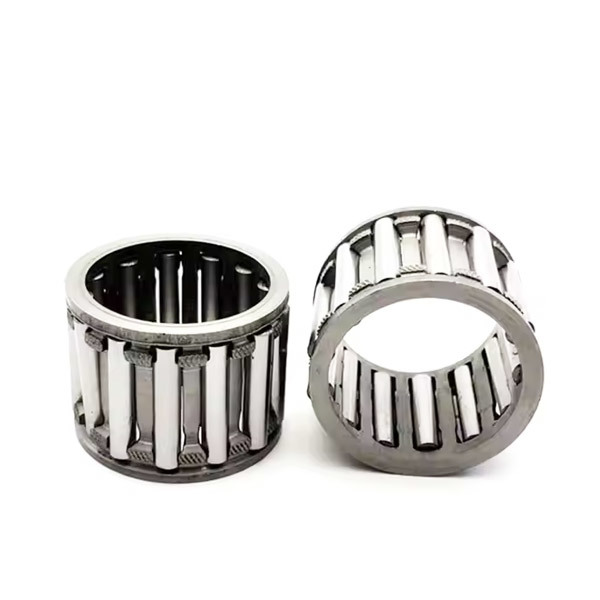
Needle roller bearings are a type of rolling-element bearing that uses long, thin rollers resembling needles. The primary purpose of these bearings is to provide a smooth and efficient rotational motion while supporting heavy loads. The lightweight design and high load-carrying capacity make them an ideal choice for various applications, especially where space is a constraint.
2.1 Anatomy of Needle Roller Bearings
To fully appreciate needle roller bearings, we must examine their anatomy. The essential components include:
- **Inner Race**: This part is attached to the rotating shaft, providing a surface for the rollers to roll against.
- **Outer Race**: The outer casing that holds the needle rollers in place.
- **Needle Rollers**: The cylindrical rollers that are elongated, providing a large surface area for load distribution.
- **Cage**: Sometimes included to keep the needle rollers evenly spaced and aligned.
3. Key Features and Advantages of Needle Roller Bearings
Understanding the key features and advantages of needle roller bearings can help in selecting the right type for specific applications.
3.1 High Load Capacity
Needle roller bearings can support significant loads despite their compact size. Their design allows for a larger contact area between the rollers and the races, distributing the load evenly.
3.2 Low Profile Design
The slim profile of needle roller bearings makes them an excellent choice for applications with limited space. This feature is particularly beneficial in sectors such as automotive and aerospace, where every millimeter counts.
3.3 Reduced Friction
Needle roller bearings are designed to minimize friction between moving parts. The rolling motion of the needle rollers ensures less resistance compared to other bearing types, leading to improved efficiency and reduced energy consumption.
3.4 Versatility
These bearings can be used in various applications, from small electric motors to large industrial machinery. Their adaptability makes them a favorite in many industries.
4. Working Principle of Needle Roller Bearings
The working principle of needle roller bearings is straightforward yet highly effective. When force is applied to the shaft connected to the inner race, the needle rollers rotate between the inner and outer races. This rotation minimizes friction and wear, allowing for smooth operation across various speeds and loads.
4.1 Load Distribution
The elongated shape of needle rollers allows for a larger surface area, enabling more efficient load distribution. This characteristic is crucial for maintaining stability and prolonging the lifespan of the bearing.
5. Types of Needle Roller Bearings
There are various types of needle roller bearings, each designed for specific applications and conditions. Understanding these types can help in selecting the most suitable bearing for your needs.
5.1 Needle Roller Bearings with Inner Ring
These bearings include an inner ring, providing enhanced stability and support for the shaft. They are ideal for applications where the shaft is not hardened.
5.2 Needle Roller Bearings without Inner Ring
This type is suitable for applications where the shaft is already hardened and can serve as the raceway. It offers a more compact design, making it suitable for space-constrained environments.
5.3 Drawn Cup Needle Roller Bearings
These bearings have a closed outer casing that provides additional protection to the needle rollers. They are particularly useful in applications exposed to contaminants.
5.4 Needle Roller Bearings with Cages
Bearings with cages are designed to keep the needle rollers evenly spaced. This design helps to reduce friction and wear, improving overall efficiency.
6. Applications of Needle Roller Bearings
Needle roller bearings are utilized in a wide range of applications across various industries due to their versatile nature and reliability.
6.1 Automotive Industry
In the automotive sector, needle roller bearings are commonly used in engines, transmissions, and wheel hubs. Their high load capacity and compact design make them ideal for these demanding applications.
6.2 Aerospace Industry
Within the aerospace industry, these bearings are critical for ensuring the reliability and performance of aircraft components, including landing gear mechanisms and control surfaces.
6.3 Industrial Machinery
Needle roller bearings are extensively used in various industrial machinery, such as conveyor systems, pumps, and motors, due to their ability to handle heavy loads and reduce friction.
6.4 Agricultural Equipment
In agricultural machinery, needle roller bearings help maintain the efficiency and reliability of equipment such as tractors and harvesters.
7. Maintenance and Care for Needle Roller Bearings
To ensure the longevity and optimal performance of needle roller bearings, regular maintenance and care are essential.
7.1 Lubrication
Proper lubrication is crucial for minimizing friction and preventing wear. Selecting the right lubricant and adhering to a regular lubrication schedule can greatly extend the life of needle roller bearings.
7.2 Inspection
Regular inspections can help identify early signs of wear or damage. Check for unusual noises, excessive heat, or contamination, as these can indicate potential issues.
7.3 Cleaning
Maintaining cleanliness is vital. Contaminants can lead to premature failure, so it is essential to keep the bearings clean and free from debris.
8. Common Issues and Solutions for Needle Roller Bearings
Despite their durability, needle roller bearings can encounter issues over time. Understanding these common problems and their solutions can prevent costly downtime.
8.1 Overheating
Overheating can result from insufficient lubrication or excessive load. To mitigate this, ensure proper lubrication and inspect load conditions regularly.
8.2 Contamination
Contaminants such as dirt and moisture can lead to bearing failure. Implementing seals or shields can help prevent contamination.
8.3 Misalignment
Misalignment of the shaft can lead to uneven wear. Regular alignment checks and adjustments can help maintain the integrity of the system.
9. Conclusion
Needle roller bearings are essential components in various industrial applications, providing smooth operations and increased efficiency. Understanding their features, working principles, and maintenance needs can significantly enhance their performance and lifespan. By selecting the right type of needle roller bearing and adhering to proper care practices, industries can ensure reliable operations and minimize downtime.
10. Frequently Asked Questions
10.1 What is the main advantage of needle roller bearings?
The primary advantage of needle roller bearings is their high load capacity combined with a compact design, making them ideal for applications with limited space.
10.2 How often should needle roller bearings be lubricated?
The frequency of lubrication depends on the specific application and operating conditions. Generally, bearings should be lubricated regularly to prevent wear and overheating.
10.3 Can needle roller bearings operate in high-temperature environments?
Yes, needle roller bearings can operate in high-temperature environments, but it is crucial to select the appropriate type of lubricant that can withstand elevated temperatures.
10.4 What are common materials used for needle roller bearings?
Common materials include high-carbon steel, stainless steel, and sometimes ceramic materials for specific applications requiring enhanced durability.
10.5 How do I know if my needle roller bearings are failing?
Signs of failing needle roller bearings include unusual noises, excessive heat, vibrations, and visible wear or damage upon inspection. Regular monitoring can help identify these issues early.
By providing a detailed exploration of needle roller bearings, this article aims to serve as a comprehensive resource for industry professionals seeking to enhance their understanding and application of these critical components.
RELATED BLOGS


10% DISCOUNT FOR NEW CUSTOMERS

WhatsApp:+8613211157555
Tel: +8613211157555
Address:Room 1106, 11th Floor, No. 23, Fengshan West Road, Jinbang Community, Daliang Street, Shunde District, Foshan City, Guangdong Province
Copyright 2025 Schaeffler (Guangdong) Transmission Technology Co., Ltd. SEO Business license