27
2026
-
07
Understanding Self-Aligning Ball Bearings: Key Features and Benefits for Industrial Applications
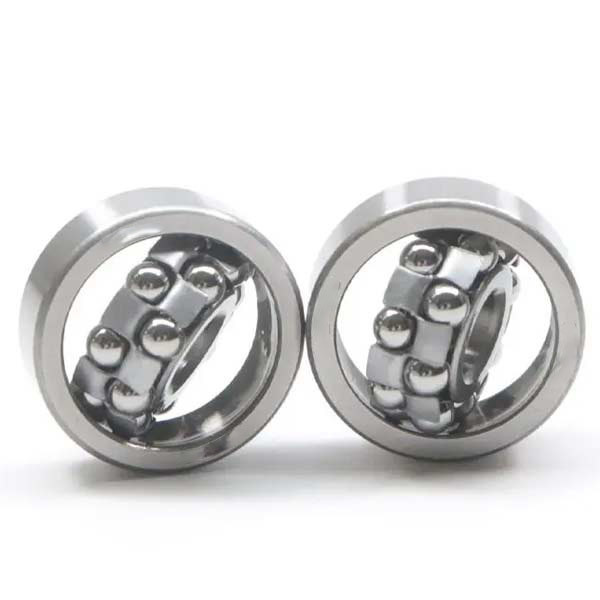
Self-aligning ball bearings are a unique type of bearing specifically designed to accommodate misalignment between the shaft and housing. This characteristic is particularly valuable in industrial applications where precise alignment can be challenging due to factors like thermal expansion, shaft deflection, or installation errors. The primary design feature of self-aligning ball bearings is thei
The primary design feature of self-aligning ball bearings is their dual-row construction, which allows for angular misalignment. The inner ring of these bearings has a spherical raceway that interacts with the spherical outer ring. This design enables the bearing to adjust to misalignments up to a certain angle without experiencing excessive stress or wear on the components, thereby extending the lifespan of the equipment.
One of the most significant benefits of self-aligning ball bearings is their ability to reduce the operational risks associated with misalignment. In industries that rely on rotating machinery, such as manufacturing, mining, and construction, even a minor misalignment can lead to premature bearing failure. By using self-aligning ball bearings, companies can minimize downtime and maintenance costs, ensuring continuous operation and enhancing overall productivity.
Moreover, self-aligning ball bearings are suitable for moderate to high-speed applications. They are capable of handling both radial and axial loads, making them versatile for various applications, including conveyor systems, agricultural equipment, and gearboxes. The flexibility offered by these bearings also allows for easier installation, as they can compensate for misalignments that might occur during the assembly process.
Another advantage is their relatively low friction compared to other types of bearings. This characteristic not only contributes to higher efficiency but also results in lower energy consumption. As industries increasingly prioritize sustainability and energy efficiency, the adoption of self-aligning ball bearings can align with these goals.
In conclusion, self-aligning ball bearings are a vital component for any industrial setup that requires robust performance under challenging conditions. Their unique design and functionality provide significant advantages, including increased durability, reduced maintenance, and improved operational efficiency. Investing in the right type of bearing can lead to substantial long-term benefits, making self-aligning ball bearings an excellent choice for a wide range of applications in the industrial equipment and components sector. Understanding their features and benefits is essential for professionals looking to enhance the reliability and performance of their machinery.

10% DISCOUNT FOR NEW CUSTOMERS

WhatsApp:+8613211157555
Tel: +8613211157555
Address:Room 1106, 11th Floor, No. 23, Fengshan West Road, Jinbang Community, Daliang Street, Shunde District, Foshan City, Guangdong Province
Copyright 2025 Schaeffler (Guangdong) Transmission Technology Co., Ltd. SEO Business license