22
2025
-
05
The difference between rolling bearings and sliding bearings
Type Principle Rolling bearings achieve relative motion through rolling of rolling elements (steel balls, rollers) between inner and outer ring raceways, and the friction form is mainly rolling friction. Sliding bearings The journal is in direct contact with the bearing hole, and the friction is reduced by lubricating oil film or solid lubricant, and the friction form is mainly sliding friction.
1. Comparison of working principles
Type Principle
Rolling bearings achieve relative motion through rolling of rolling elements (steel balls, rollers) between inner and outer ring raceways, and the friction form is mainly rolling friction.
Sliding bearings The journal is in direct contact with the bearing hole, and the friction is reduced by lubricating oil film or solid lubricant, and the friction form is mainly sliding friction.
2. Comparison of structural components
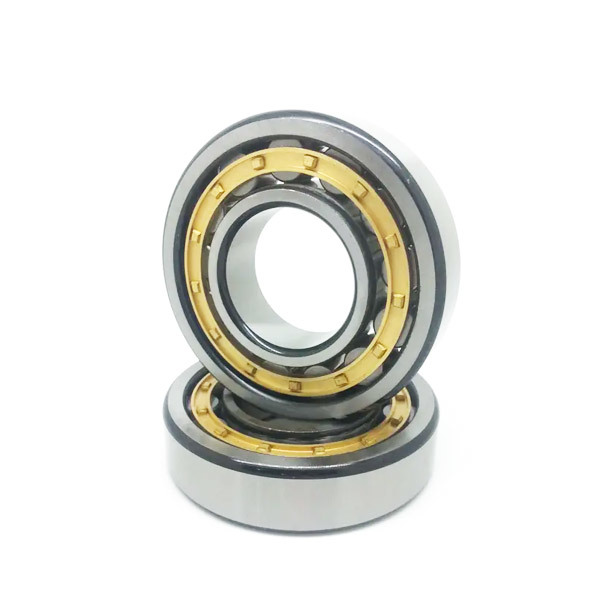
Rolling bearings
Standard components:
Inner ring: cooperates with the shaft and rotates with the shaft;
Outer ring: cooperates with the bearing seat, fixed or rotating;
Rolling elements: steel balls, cylindrical rollers, tapered rollers, etc., carry loads and transmit motion;
Cage: separates rolling elements and reduces mutual friction (such as stamped cages of deep groove ball bearings and solid cages of tapered roller bearings).
Features: Standardized structure, finished products can be purchased directly, and installation is convenient.
Sliding bearing
Typical structure:
Neck: rotating shaft surface;
Bearing seat: fixed bearing liner or bushing;
Bearing liner/bearing bushing: wear-resistant material layer (such as babbitt alloy, copper alloy, engineering plastic) in direct contact with the neck;
Lubrication system: oil holes and oil grooves are used to introduce lubricating oil (auxiliary devices such as oil pump and oil cooler are required for liquid lubrication).
Features: The structure needs to be customized and often integrated with the equipment.
III. Performance characteristics comparison
Dimension Rolling bearing Sliding bearing
Friction coefficient Low (0.001~0.005), high efficiency, low heat generation. High (0.005~0.01), can be reduced to below 0.001 when liquid lubrication, but depends on lubrication conditions.
Load capacity - Radial load: deep groove ball bearings are suitable for light loads;
- Axial load: tapered roller bearings can withstand large axial forces. - Liquid hydrodynamic sliding bearings have strong load capacity and are suitable for heavy loads;
- Hydrostatic sliding bearings can withstand extremely large loads and have very low friction.
Speed adaptation High-speed performance is good (such as angular contact ball bearings can reach tens of thousands of revolutions per minute), but it is limited by the centrifugal force of the rolling element. High-speed performance is excellent when liquid lubrication is used (such as turbine sliding bearings), but dry friction is easy to occur during startup.
Noise and vibration The movement of rolling elements may generate vibration and noise, and precision bearings (such as low-noise ball bearings for motors) can reduce noise. Liquid lubrication runs smoothly and has low noise (such as precision grinder spindle sliding bearings).
Life Life is affected by load, speed, and lubrication, and fatigue wear is the main failure form (such as raceway pitting). Long life under normal lubrication, and wear is the main failure form (such as increased clearance due to bearing wear).
Installation accuracy The installation accuracy requirements are high (such as tapered roller bearings need to adjust the clearance), otherwise it is easy to cause abnormal wear. The coaxiality and surface roughness requirements of the shaft and the bearing seat are extremely high (such as large motor sliding bearings require scraping technology).
Cost Standard parts are low in cost, but high-precision bearings (such as aviation bearings) are expensive. Customized design costs are high, and the manufacturing process of large sliding bearings (such as ship bearings) is complex.
IV. Comparison of application scenarios
Typical applications of rolling bearings
Light industry and general machinery:
Motors, fans, pumps (deep groove ball bearings);
Automobile gearboxes, wheel hubs (tapered roller bearings, angular contact ball bearings).
Precision equipment:
Machine tool spindles (precision cylindrical roller bearings), robot joints (cross roller bearings).
Small and medium load scenarios:
Office equipment (such as printer rollers), household appliances (such as washing machine drum bearings).
Typical applications of sliding bearings
Heavy load and large equipment:
Ship spindles, mining machinery (liquid dynamic sliding bearings);
Turbines, generators (elliptical pads, tilting pad sliding bearings).
High speed or precision scenarios:
Aircraft engine spindles (oil film bearings), precision grinder spindles (static sliding bearings).
Special environments:
Metallurgical equipment (high temperature alloy bearings), chemical equipment (corrosion-resistant plastic bearings).
5. Maintenance and reliability comparison
Rolling bearings:
Easy to maintain, just add grease regularly (some maintenance-free bearings do not need lubrication);
Failure mode is clear (such as cage breakage, raceway wear), easy to replace.
Sliding bearings:
Rely on complex lubrication system (need to filter and replace lubricating oil regularly), high maintenance cost;
Need professional personnel to adjust the clearance (such as scraping and grinding), difficult to troubleshoot.


10% DISCOUNT FOR NEW CUSTOMERS

WhatsApp:+8613211157555
Tel: +8613211157555
Address:Room 1106, 11th Floor, No. 23, Fengshan West Road, Jinbang Community, Daliang Street, Shunde District, Foshan City, Guangdong Province
Copyright 2025 Schaeffler (Guangdong) Transmission Technology Co., Ltd. SEO Business license